 USD
USD  Swedish krona (SEK SEK)
TL;DR
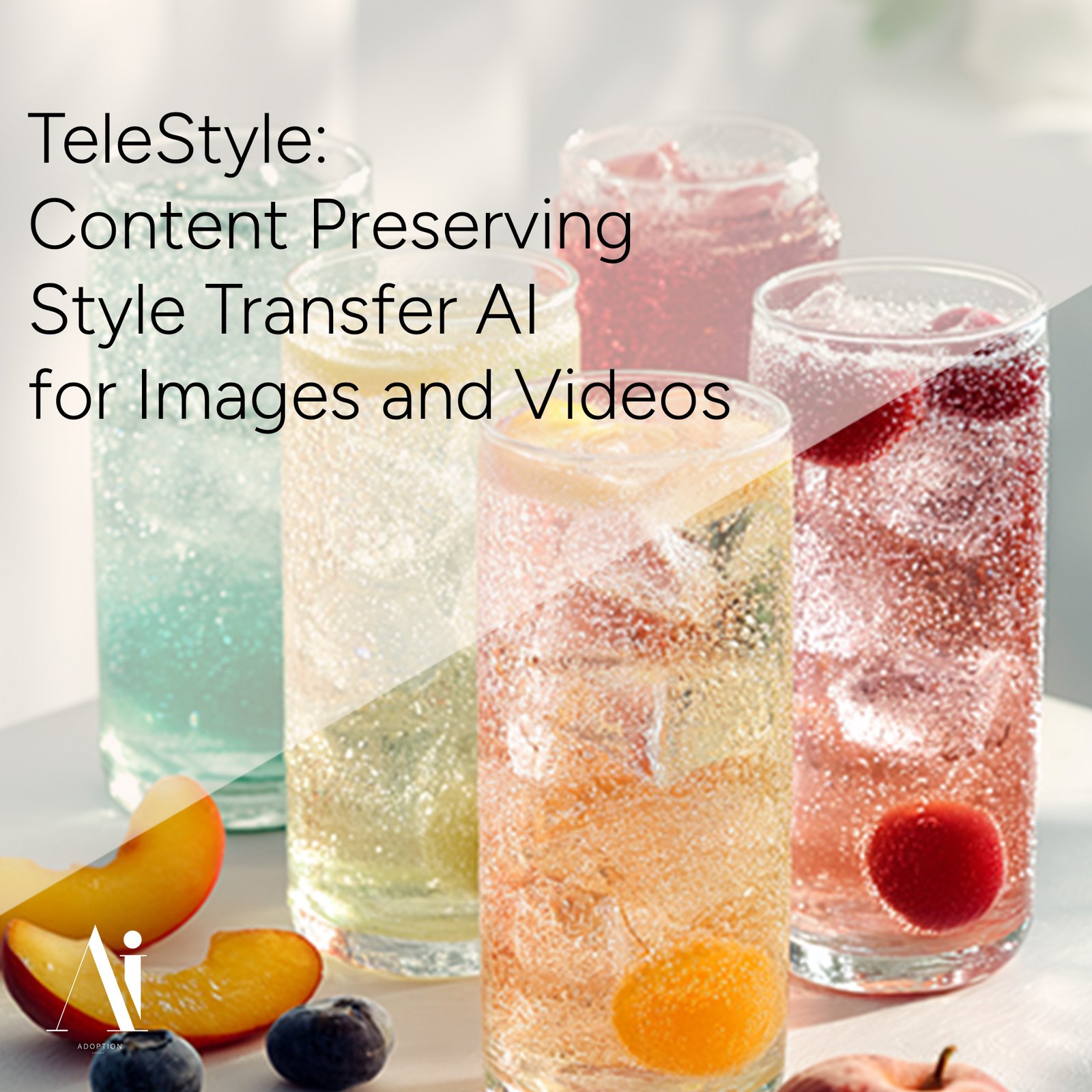
TeleStyle is a content preserving style transfer ai model that lets creators apply a visual style to an image or video while keeping the original content intact. It stands out because it works for both images and videos, uses a lightweight design, and balances style quality, content fidelity, and temporal consistency across frames.
ELI5 Introduction
Imagine you have a drawing of a cat and you want it to look like a Van Gogh painting, but still remain clearly the same cat. TeleStyle is like a smart art assistant that changes the look of the picture without changing what is in it. That is the whole point of a good ai image style transfer system: keep the subject recognizable, change only the visual treatment around it.
The same idea works for video too. Instead of turning a moving scene into a blurry artistic mess, TeleStyle tries to keep the objects, motion, and structure stable while giving the whole clip a new style. That is why it matters for creators, studios, and AI teams building production workflows, especially anywhere video style transfer needs to look consistent from the first frame to the last.
This guide walks through what TeleStyle is, how the underlying neural style transfer ideas fit into a diffusion based pipeline, why it matters for brands, and how to plug it into a real creative operation.
Detailed Analysis
What TeleStyle Is
TeleStyle is a content preserving style transfer ai framework for images and videos developed by TeleAI. It is built on top of Qwen Image Edit and is designed to solve a long standing problem in diffusion based systems: style and content often get mixed together, which can cause the model to distort the subject while trying to apply a visual look.
The project uses a lightweight architecture with LoRA modules and a curriculum continual learning training approach. In practical terms, this means the system is designed to stay efficient while learning from a mix of curated and synthetic style triplets so it can generalize beyond a narrow set of examples. Compared with older neural style transfer methods that struggled to preserve identity, this framing prioritizes structural fidelity as a first class metric.
Why It Matters
For creators, the real challenge is not just making something look artistic. It is preserving the underlying scene, identity, edges, and composition while changing the style in a controlled way. TeleStyle is built to improve that balance, which makes it relevant for marketing visuals, product campaigns, motion design, and AI assisted post production.
This matters because most real world workflows do not need random stylization. They need repeatable transformation with consistent results across many assets, and TeleStyle is positioned around that production need. In commercial settings, an image style transfer ai stack is only useful if the same product, face, or logo comes out recognizable every time.
Core Technical Ideas
TeleStyle rests on three interlocking commitments that together explain why it is being treated as a serious ai style transfer option rather than a novelty demo.
Content preservation is the main promise. The object in the image or video should still look like itself after stylization, instead of being warped, softened, or reinterpreted beyond recognition. This is the axis where earlier stylizers most often failed, especially on faces, product silhouettes, and text.
Style similarity is the second priority. The model closely reflects the target visual style rather than only approximating it loosely, and the project reports strong results on style similarity metrics compared with earlier stylizers.
Video consistency is the third. Video adds a harder requirement, because the style must remain stable over time. TeleStyle includes a video to video stylization module intended to improve temporal consistency and visual quality across frames, which is the piece that makes ai video style transfer practical for real clips rather than short demos.
Market Context
TeleStyle arrives at a moment when AI image and video tools are moving from novelty to workflow infrastructure. The market is shifting toward tools that help teams edit, adapt, and localize visual content faster, not just generate new content from scratch. TeleStyle fits that shift because it supports controlled transformation rather than purely freeform generation.
That is strategically important for brands and creative teams. In many commercial settings, the biggest value is not creating an entirely new visual, but keeping a campaign asset recognizable while adapting its style for different audiences, channels, or brand systems. TeleStyle addresses that use case more directly than generic stylization tools, and it slots naturally into a broader style transfer ai roadmap alongside image editing, video editing, and dubbing pipelines.
Related service: We create 5 professional, high-quality AI images tailored for your products or website — delivered in 24 hours for just $100. Get 5 AI Images →
Performance Signals
The technical report describes TeleStyle as state of the art across style similarity, content consistency, and aesthetic quality. It also reports that the model outperforms earlier methods such as CSGO and DreamO on these key dimensions, with stronger style matching and better preservation of structure and detail.
What is especially notable is the balance, not just the peak score. In real production use, a model is only valuable if it can preserve content reliably while still producing visually attractive outputs at scale. That balance is the main design advantage TeleStyle is trying to deliver, and it is the reason it is worth benchmarking against your current stylization toolchain.
How It Connects to Creative Workflows
TeleStyle is not just a research result. It points toward practical use in creative pipelines where teams need to retarget a visual theme across image assets, product renders, cinematic frames, or short video segments.
For example, a design team could use a reference style to give a set of promotional visuals a unified artistic treatment while keeping product shape, text placement, and scene composition intact. In video, the same idea could help preserve motion continuity while applying a consistent aesthetic across a clip, which is exactly where most legacy video style transfer tools break down.
Implementation Strategies
Adopting a content preserving style transfer ai model like TeleStyle works best when it is treated as a workflow decision, not a plugin swap. The teams that get value quickly are the ones that scope the first use case tightly, set clear evaluation criteria, and wire the model into an existing creative pipeline instead of a new isolated one.
Start With Controlled Inputs
The best way to use a content preserving model is to begin with clean source material. Strong input images, clear subject separation, and well defined style references usually produce better outputs than cluttered or low quality assets. A short pre flight step, including background cleanup, color normalization, and asset tagging, will do more for output quality than any prompt tweak.
Define the Goal Before Stylizing
Teams should decide whether the goal is brand consistency, artistic variation, or motion friendly stylization. That matters because content preserving transfer is most useful when the creative brief is specific and measurable. A brief that says “make it look premium” will drift. A brief that says “match this reference palette, preserve product silhouette, keep the tagline legible” will not.
Test Across Multiple Asset Types
A practical rollout should test the model on both still images and motion content. TeleStyle is designed for both, but the creative risks differ: still images may suffer from structural drift, while video may suffer from flicker or inconsistent texture across frames. Running a mixed asset pilot early surfaces these failure modes before they turn into rework at scale.
Build a Review Loop
Human review remains important. The most effective workflow is to generate multiple candidates, compare them against the original content, and check whether style intensity, legibility, and identity preservation are all acceptable. Bake this into a lightweight review tool so reviewers score against consistent criteria rather than gut feel.
Want to apply style transfer to your image library at production scale? Our AI Image Editing Service handles style adaptation, batch processing, and creative direction so your visual assets stay on brand across every campaign. Explore the service →
Best Practices & Case Studies
Best Practices
Use style references that are visually distinct but not overly chaotic, because very complex reference styles can increase the risk of content distortion. Keep a quality control checklist for structure, object identity, and temporal stability, especially when working with video. That checklist is what turns an ai image style transfer experiment into a repeatable production step.
Also, treat TeleStyle as a transformation tool rather than a full replacement for art direction. The strongest results usually come when the model is used inside a broader creative process that includes human selection, editing, and final polish. The model chooses the pixels, the team chooses the brief and the standard.
Case Example 1: Unified Brand Campaign Visuals
A brand campaign team wants a unified artistic look across a series of product visuals. TeleStyle can help them stylize the same product set into a single visual theme while preserving the actual product silhouette and composition, which is important for recognition and trust. Instead of shooting bespoke assets for every seasonal variation, the team can retreat, restyle, and republish existing shots without losing the product identity that customers already recognize.
Case Example 2: Stylized Motion Concept Reel
A motion design team wants to stylize short video clips for a concept reel. TeleStyle’s video to video module is relevant here because it targets temporal consistency, reducing the chance that the style breaks from frame to frame. That makes the difference between an interesting pitch deck loop and a reel that actually holds up in a client review, which is where most freeform ai video style transfer demos still fall over.
Case Example 3: Cross Market Localization
A global content team needs to adapt the same core visuals for different regional audiences, each with its own aesthetic conventions. TeleStyle lets them keep the underlying subject fixed while shifting palette, texture, and stylistic references per market. That turns a per market reshoot into a per market restyle, which is a much shorter and cheaper production loop.
Planning a stylized video campaign or a concept reel? Our AI Commercial & Video Creation Service uses content preserving style transfer AI to produce cohesive, on brand video assets ready for ads, social, and product launches. Explore the service →
Actionable Next Steps
For Content Teams
Audit your current visual workflow and identify where style adaptation is needed most. If your team frequently reworks the same content for different campaigns, TeleStyle is a strong candidate for pilot testing. Start with a single content series and a single style reference so you can measure the lift cleanly.
For AI Teams
Benchmark TeleStyle against your current stylization approach using your own assets. Measure content preservation, style similarity, and output consistency, then compare the results against manual editing time and rework rates. If TeleStyle wins on any two of those axes, it earns a slot in your image style transfer ai stack.
For Product Leaders
Consider TeleStyle as part of a broader AI content stack rather than a standalone novelty tool. Its value increases when integrated into creative review systems, asset management pipelines, and production workflows that need repeatable stylization. The winners in this space will not be the teams with the flashiest single output. They will be the teams whose ai style transfer pipeline runs quietly in the background every week.
Conclusion
TeleStyle is important because it attacks one of the hardest problems in generative media: how to change style without breaking content. By combining content preservation, style fidelity, and video consistency, it moves stylization closer to a production ready capability rather than a purely experimental one. That is a meaningful step forward for the whole style transfer ai category, not just for a single model release.
For teams working in AI content creation, marketing, or visual production, the key takeaway is simple: TeleStyle is most valuable when you need reliable transformation, not just flashy generation. Its best use case is controlled creative adaptation at scale, especially when the same brand identity has to move across regions, formats, and campaigns without losing coherence.
Need to stylize existing footage without breaking motion continuity? Our AI Video Editing Service integrates ai video style transfer into your post production workflow so clips stay smooth, consistent, and audience ready. Explore the service →
Need Professional AI-Generated Images?
We create 5 professional, high-quality AI images tailored for your products or website — delivered in 24 hours for just $100.
Get 5 AI Images